
European Implementation Event 2027
14 June – 16 June 2027 in Limerick, Ireland
What is the #EIE2027?
At the #EIE2027, Implementation – the translation, uptake, and integration of research findings within the daily routines of human services – takes center stage. As an attendee, you will learn about the latest, cutting-edge implementation science and practice, participate in inspiring and surprising discussions with international colleagues, expand your professional network, and be inspired by the diversity of this exciting field.
Who is it for?
The #EIE2027 brings together individuals and organisations engaged in synthesising, translating, adopting and implementing evidence in human service practice and policy. You may work in health, social welfare, education or other human service sectors; you may be a psychologist, social worker, occupational therapist, nurse, sociologist, economist or have a totally different educational background; researchers as well as practitioners, funders, organisational leaders, intermediaries and other roles are welcome at the event – as are those who are new to the field and those with extensive knowledge and experience.
Where is #EIE2027 happening?
The European Implementation Event 2027 is co-hosted by the European Implementation Collaborative, the Centre for Implementation Research at the University of Limerick, Queen’s University Belfast and the Health Implementation Research Hub, University College Cork. It will take place from June 14 – 16, 2027, in Limerick, Ireland.
Questions?
Get in touch with any questions at eie@implementation.eu. We are looking forward to hearing from you!
Stay up to date!
This website is the central communication platform for #EIE2027 news. You can also sign up for the EIC Newsletter, and follow us on LinkedIn to receive the latest news about the event.
This year’s event theme is:
Shaping Tomorrow Together: Accessible and inclusive implementation science and practice for public, practitioners & policymakers
People who use health, social, educational and other public services need to receive evidence-informed services. There is strong interest in researching the best ways to make that happen. Research disciplines like Implementation Science, Knowledge Translation/Mobilisation, and Improvement Science continue to expand their reach and influence. Across these areas, there is a shared commitment to ensuring that evidence informs policy and practice in ways that are meaningful, equitable, and impactful.
However, while substantial scientific progress has occurred, these fields of inquiry have yet to become fully accessible and inclusive for the public, communities, practitioners, and policymakers they are intended to serve. Although this shift is already reflected in the growing emphasis on co-production methods and increased public involvement in implementation research and related fields, current efforts do not go far enough. There remains an urgent need to fully and genuinely open this door to allow participation from everyone relevant and responsible for creating change in our health, social, education, and public service systems, particularly those whose voices, experiences, and knowledge have traditionally been underrepresented.
This raises important challenges. What does it mean to make implementation research more accessible? How can the public, practitioners and policymakers be better engaged and involved in implementation research and practice? Who is responsible for driving this change? How can the implementation science community better reflect the multiple and varied realities of those planning, delivering and receiving services? How might we better develop and apply knowledge collectively? How do we navigate different layers of inclusion, representation, and participation, and who is included in our understanding of “everyone”? What practical steps are needed to build stronger partnerships across implementation research, policy, and practice while addressing barriers to meaningful involvement and influence?
These questions will be at the heart of the EIE2027. Through presentations, workshops, and discussions, the event will provide a space to learn together, to reflect on progress, and to identify practical steps towards a more accessible, inclusive and equitable future for implementation science, research and practice, one in which we recognise that implementation is for everyone, and that meaningful impact depends on working together.
Topics that the EIE2027 will address are:
Submission Topics:
Expanding Boundaries: Crossing traditional boundaries for inclusive and lasting change
Read moreBroader engagement and participation in implementation science and practice requires working beyond traditional organisational, sectoral, and professional boundaries. Boundary crossing can create more sustainable and inclusive change, but brings challenges in coordination, relationships, and shared purpose. Submissions under this topic focus on research, initiatives and experiences that bridge boundaries between organisations, sectors, professions and communities, highlighting partnership approaches that enable implementation science and practice to reach and involve diverse interest-holders.Democratising Knowledge: Making knowledge accessible to all
Read moreMaking implementation research knowledge usable outside academia is central to implementation science. Yet evidence is often communicated in ways that remain inaccessible to policymakers, practitioners, and the public. Submissions under this topic focus on accessible and inclusive approaches to knowledge translation and dissemination, including co-creation, plain-language communication, and innovative dissemination strategies and outcomes. We welcome work that demystifies implementation science and supports shared understanding across diverse audiences, and recognises different ways of creating, translating, sharing and using knowledge.
Widening the Toolbox: Advancing implementation science methods and tools for wider use
Read moreTheories, models, frameworks, and methods are central to implementation science, but can be difficult to access and apply outside academic settings. At the same time, these methods and tools still need to be advanced and refined to address emerging implementation challenges and contexts. Ensuring that implementation science continues to evolve while also reaching a wider audience requires a focus on usability, inclusivity, relevance, and practical application. Submissions under this topic explore the development, advancement, translation, adaptation, simplification, and co-creation of implementation science concepts, methods, and tools to support use by policymakers, practitioners, communities, and the public. We welcome contributions that advance methodological and theoretical innovation, as well as those that promote pragmatism, inclusivity, and meaningful participation, strengthening the science and practice of implementation.
Enhancing Capacity: Building a skilled and inclusive implementation workforce
Read moreEmbedding equitable implementation science in practice and policy requires a diverse and capable workforce skilled in facilitating accessible and inclusive implementation. This workforce – including roles such as front-line implementers, implementation support practitioners, and implementation leaders – is only just emerging, raising questions about its development, professionalisation, and accreditation. Submissions under this topic focus on education, training, roles, and career pathways that support workforce development and diversity, as well as initiatives that strengthen implementation skills and knowledge across sectors.
Multiplying Pathways for Scale: Expanding impact in complex contexts
Read moreWhile implementation science has always held an interest in methods for scaling up effective interventions in public services, it is shaped by political and strategic contexts that are difficult to influence and control. Scaling implementation therefore remains challenging, and pathways toward strengthening systems to sustainably and inclusively scale proven interventions are not easy to find, especially in low-resource settings. Submissions under this topic address the challenges of scaling in complex settings, with a focus on ensuring that expansion efforts remain responsive to local needs, address potential inequalities, and continue to engage diverse interest-holders and communities.
Connecting Policy: Strengthening the connection between evidence, implementation and decision-making
Read morePolicymakers create conditions that influence implementation by shaping priorities, resources, and systems, influencing how evidence is put into practice. The relationship between policymakers, implementation research, and practice is complex because different priorities, forms of evidence, and timescales govern how they operate. Submissions under this topic explore how implementation science and practice can inform policymaking and implementation to support the uptake and sustainability of evidence-informed practices. We welcome contributions at the interface of policy implementation and implementation science, advancing knowledge about the role of policy for implementation, and approaches to implementation-informed policymaking across diverse contexts.
Opening Digital Doors: Implementation science and practice in an era of digitalisation and AI
Read moreDigital technologies and artificial intelligence (DTAI) are transforming how people access, understand, and use information, creating new opportunities to investigate and support implementation while also introducing risks of exclusion and inequity. Submissions under this topic explore how DTAI can or should support implementation science and practice by enhancing access, engagement, and participation across diverse populations and settings. We welcome contributions that explore how the use of DTAI influences the needs, preferences, and experiences of the people and communities the field is intended to serve, and that critically examine issues of trust, transparency, accessibility, inclusion, and equity arising from its use.
Other submissions under alternative topics are welcome if they align with the central event theme.
The EIE2027 welcomes submissions
• from all settings and contexts in health, social welfare, education and public systems and all perspectives
• that have a genuine focus on public, patient and service user involvement
• that describe how we as a field can learn from setbacks
• that are of a purely methodological or theoretical nature
Detailed information about submission formats can be found here.
Call for Abstracts
You can now submit your abstract for the 2027 European Implementation Event.
The submission portal will close on January 11, 2027, 23.59 CET. You can submit abstracts in various formats, described briefly below and in greater detail here. Please have a good look at all formats before you start your submission process.
Please email us if you have any questions about the abstract submission process.
EIE2027 Submission Formats
Under the theme “Shaping Tomorrow Together: Accessible and inclusive implementation science and practice for public, practitioners & policymakers”, we invite you to submit your abstract to one of the following formats.
Across all formats, we encourage meaningful involvement of public and patient representatives, people with lived experience and other knowledge users. This might include co-facilitating a debate, co-presenting an oral presentation, sharing lived experience or helping to shape the session in another way. We particularly welcome submissions that bring different perspectives together and demonstrate implementation science and practice being shaped together.
Ride the Knowledge Wave (oral presentation)
Read moreIn a Ride the Knowledge Wave session, event attendees learn about and discuss latest implementation research findings.
Here you can submit an abstract to present your work in a single oral presentation. If your abstract is accepted, you will present in a Ride the Knowledge Wave session with two other presenters (three presenters in total). Each session follows the same format: The oral presentations last 12 minutes (9 mins + 3 mins fact-focused Q&A) each; after all presentations, further 20 minutes can be used for discussion.
When submitting your abstract, you can indicate if your oral presentation, if not accepted as such, can be considered for a P3 session (see below).
The Implementation Fishbowl (debate)
Read moreAn open Implementation Fishbowl session is for lively and open debate of hot topics in implementation.
Here you can submit an abstract to discuss, debate and explore an implementation topic with your active audience participants. Several chairs (traditionally 5) are arranged in an inner circle – the fishbowl. Remaining chairs are arranged in concentric circles outside the fishbowl. A few participants are pre-selected to fill the fishbowl (submitters), while the rest of the group sit on chairs outside the fishbowl. One chair in the fishbowl is left empty.
The moderator introduces the topic, and the participants in the fishbowl (inner circle) start discussing the topic. The audience outside the fishbowl listens in. Any member of the audience can, at any time, occupy the empty chair and join the fishbowl. When this happens, an existing member of the fishbowl must voluntarily leave the fishbowl and free a chair. The discussion continues with participants frequently entering and leaving the fishbowl. Depending on how large the audience is, many audience members can spend some time in the fishbowl and take part in the discussion. When time runs out, the fishbowl is closed, and the moderator summarises the discussion.The Implementation Wild Card (open format)
Read moreWild Card sessions are a blank canvas: a space for presenters to bring an implementation topic to life through presentations, debate, idea development, problem-solving or other creative approaches.
Wild Card sessions don’t follow a prescribed format. Abstracts submitted under this format should describe a clear and distinct implementation topic or issue; if accepted, presenters are free to shape and facilitate the session in the way they feel will work best for their topic and audience. We encourage creativity and active audience engagement. For example, a Wild Card session could be:
• a structured idea development (Idea Jam) session involving the audience throughout
• a focused problem-solving session working with the audience to address a specific implementation challenge
• a topic-specific debate between a panel and the audience
• a World Café combining small-group discussion, exercises and reflection
• a roundtable exploring different perspectives and experiences
• or something entirely different!Think beyond the traditional presentation and create an experience that gets people thinking, talking and doing.
P3 – Promise, Progress, Problems (poster)
Read moreIn a P3 session, event attendees learn about promising implementation work that may be in progress or already has generated interesting findings.
Accepted presenters will present a poster based on a 4-minute lightning talk. Presenters will be grouped (4-5 oral presenters per group) by topic and assigned a moderator; delegates participate in a 10–15-minute Q&A following all presentations.
Event Committee

Andy Bray
Location:
Ireland


Bianca Albers
Location:
Switzerland

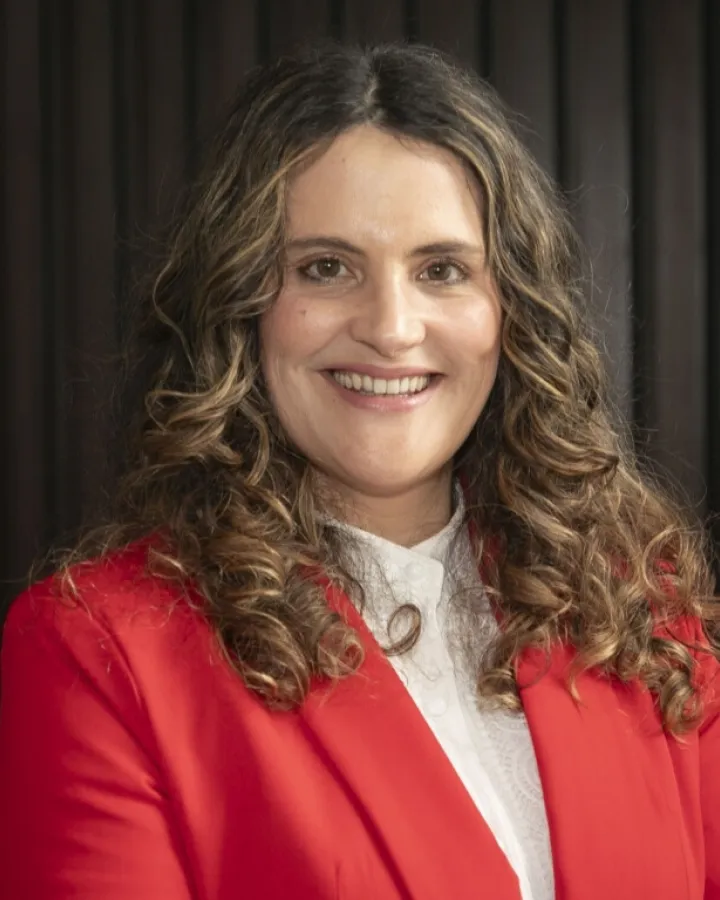




Jackie Dwane
Location:
Ireland



Register now for the EIE2027!
Registration is now open for the European Implementation Event 2027, taking place in Limerick, Ireland, on 14–16 June 2027.
Details of registration fees, important dates, and what’s included in your registration are provided below.
If you have any questions about registration, please contact us at eie@implementation.eu.
| Night Owl book by 1/1/2027 |
Early Bird book by 28/3/2027 |
Regular fee book by 1/6/2027 |
|
| Standard fee 15 & 16 June |
€ 485 | € 530 | € 770 |
| Student fee 15 & 16 June |
€ 340 | € 395 | € 590 |
| Pre-event BBQ 14 June |
€ 50 | € 50 | € 60 |
The standard and student fee includes:
- Access to the EIE2027 Implementation Slam and welcome reception with drinks (pre-event day 14 June)
- Access to the EIE2027 including lunch and coffee/tea breaks (15 & 16 June)
- Plenary sessions with high-profile keynote speakers as well as a wide variety of parallel sessions of different formats and topics
- A social programme including networking activities, as well as a programme designed for early career attendees
- Free registration for online webinars in the lead up to the EIE2027
EIE Programme
RegisterDay 1
Date & Time (CET)
Event
Day 2
Date & Time (CET)
Event
Pre-event workshops
Early Career Activities
Co-hosts

Queen’s University Belfast
Location:
Northern Ireland
University of Limerick
Location:
Ireland
University College Cork
Location:
Ireland
Involved & Equal
Location:
United Kingdom
Gold partners

Amsterdam University Medical Centre
Location:
Netherlands
Partners
Venue
EIE2027 Speakers
Keynote speakers

Anita Kothari
Anita Kothari, PhD, is a full Professor at Western University’s School of Health Studies, specializing in knowledge translation. Her current research focuses on power and shared authority in integrated knowledge translation and research coproduction. She examines how power relations shape whose knowledge counts, which expertise is recognized as legitimate, who influences decisions, and how the benefits and burdens of collaborative research are distributed. Integrated knowledge translation partnerships can take the form of token consultation or equitably shared authority, with many arrangements falling somewhere in between. Her research therefore moves beyond asking whether collaboration is beneficial. Instead, she asks how integrated knowledge translation and coproduction work, for whom, under what conditions, and with what consequences. She also examines what distinguishes partnerships characterized by shared authority from those that produce inequitable team dynamics and research contexts. She has made significant contributions to advancing health systems and knowledge translation research and has received numerous accolades, including election to the Royal Society of Canada’s College of New Scholars, Artists & Scientists.