
ARCHIVE
European Implementation Event 2025
5 June – 6 June 2025 in Newcastle, United Kingdom
This year’s event theme is:
Implementation impact in the age of complexity
Walking the tightrope between scientific rigor and real-world pragmatism
Submission Topics:
Re-defining impact: What matters to whom?
Read moreThe impact that an implementation researcher strives for may be different from the effects desired by practitioners or policy developers. Funders may understand beneficial changes to the community in one way, and the community may view these changes differently. Submissions under this topic focus on impact, outcomes, and effects, and ways to create agreement on relevant impact agendas when diverse and opposing interests and world views are involved. We also welcome submissions on measuring impact creatively and pragmatically, including political and economic impact.
Navigating the maze of equity and inclusion: Implementation science for all?
Read moreIn recent years, equity and inclusion have been among the most central points of attention in implementation science. North American political and societal developments have influenced much of this debate, whereas European contributions played a less prominent role. Submissions under this topic present European perspectives on equity and inclusion, discuss what these concepts mean in the context of European countries, explore how unintended consequences of implementation research and practice might widen inequalities, and specify how the field can contribute to overcoming disparities.
Tidying the mess: It's complex, and now what?
Read more“It’s complex!” appears to have become an often-repeated mantra when explaining why implementation does not deliver on its promise to improve practice or policy. This begs the question of how to understand and navigate this complexity better. Submissions under this topic showcase implementation research and practice that demonstrate exactly that and may include novel empirical findings, methods, models, tools, and other innovations to tackle the age of complexity.
Between research, practice and policy: Finding common ground across three worlds
Read moreSubmissions under this topic focus on how researchers, practitioners, and policy developers partner around evidence production and use, overcome their differences, create shared understandings, and collaborate for better implementation. Presentations that focus on the challenges and dilemmas involved in these efforts, including examples of collaborative failures, are also welcome, as are presentations shedding light on the role of funders and intermediaries.
Never the twain shall meet? Policy in implementation science and practice
Read morePolicy has always played a relatively minor role in implementation science when compared with programs and practices. This appears to be changing, reflected in a greater appetite for conceptualizing and understanding this role in the field. However, integrating policy-informed thinking in implementation research and practice is not easy, requiring insights into social sciences and the realities of boots-on-the-ground policymaking. Submissions under this topic shed light on the realities of policy implementation and efforts to create stronger links between policymakers and implementation researchers for the benefit of implementation practice.
Fade or flourish: Building the infrastructure for sustainable implementation science and practice
Read moreSustaining and scaling implementation science and practice for the long term remains daunting for research, policy, and funding as well as educational institutions with a stake in the discipline. Infrastructure such as implementation science and/or practice education programs, roles and career pathways, professional networks, and funding streams are capacity-building-blocks that are only just emerging, especially in European countries. Submissions under this topic present and discuss examples of this development toward greater implementation capacity, the gaps that still exist in this infrastructure, and ways to close them.
The balancing pole: Methods and tools to successfully walk the tightrope
Read moreSuccessfully walking the tightrope between scientific rigor and real-world pragmatism often means adapting scientific approaches, study designs, and scientific methods to the needs of practitioners and policy makers. Rapid reviews are one example of this type of innovation. Submissions under this topic illustrate the application of such tools while highlighting their strengths and limitations, detail the contextual conditions of effectiveness, and examine new solutions to meet under-recognized requirements.
Event Committee



Nadina Peters
Location:
Norway
Registration
EIE Programme
We are pleased to announce the EIE2023 pre-event workshops, which will be held online, in the run-up to the main EIE2023 event in June. The workshops will be led by international experts in the field and will feature interactive exchanges with participants. Join the EIE2023 pre-event workshops and continue the discussion at EIE2023!
Day 1
Date & Time (CET)
Event
Day 2
Date & Time (CET)
Event
Pre-event workshops
We are pleased to announce the EIE2023 pre-event workshops, which will be held online, in the run-up to the main EIE2023 event in June. The workshops will be led by international experts in the field and will feature interactive exchanges with participants. Join the EIE2023 pre-event workshops and continue the discussion at EIE2023!
Date & Time (CET)
Event
Apr 27, 2023
16:00-17:00
Grappling with the Updated Consolidated Framework for Implementation Research (CFIR) An advanced workshop for experienced users of the framework
The original Consolidated Framework for Implementation Research (CFIR) was published in 2009 in Implementation Science; although it is among the most cited frameworks in implementation science, advances in the field necessitated updates to the framework. As a result, the Updated CFIR and the CFIR Outcomes Addendum were published in 2022. The Updated CFIR includes revisions to existing domains and constructs as well as the addition, removal, and relocation of constructs. These changes address gaps in the CFIR as well as important critiques of the framework, including the need to better center innovation recipients and determinants to implementation equity in the framework. Since the publication of the Updated CFIR, multiple researchers in the European Implementation Collaborative (EIC) have worked to use the framework in their projects, resulting in multiple in-depth discussions about how to understand and use the Updated CFIR.
With this EIE2023 pre-conference workshop, we would like to invite a wider circle of international colleagues to join the discussion and share their experience using the Updated CFIR. This workshop is not a basic introduction to the framework; this workshop is intended for individuals already familiar with the Updated CFIR who want to share experiences using the framework and ask questions. All levels of experience are welcome to contribute to the session.
We have invited two CFIR experts to join us to share in-depth knowledge on the Updated CFIR and provide advice. Join us on April 27th online and continue the discussion at EIE2023!
Speaker(s): Bianca Albers
–
Speaker(s):
Early Career Activities
Gold partners
Silver partners
Bronze partners
General partners
ZonMw
Location:
Netherlands
ZonMw (The Netherlands Organisation for Health Research and Development) is the national body that funds and promotes health research and healthcare innovation in the Netherlands. Acting as a bridge between science and society, ZonMw supports projects across the full spectrum of health—from prevention and youth care to curative and long-term care—ensuring that research findings are effectively implemented into practice.
Through the generous sponsorship of ZonMw, it was made possible that conference proceedings, including abstracts accepted in the formats Ride the Knowledge Wave, Walk the Talk, Science Slam, and P3, will be published in a separate Supplement to the journal Implementation Science.

UK Implementation Society

King’s College London
Venue
Keynote speakers
Carl May (UK)
Location:
United Kingdom
Organisation / Network:
King’s College London
European Implementation Collaborative
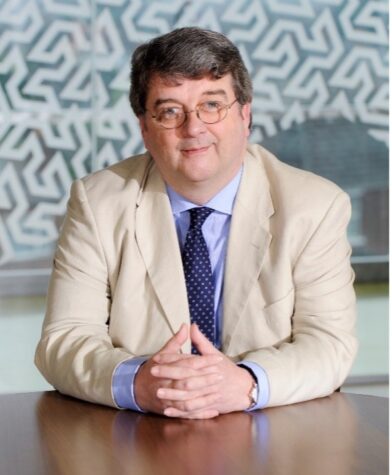
Carl May is Professor of Health Systems Implementation at the London School of Hygiene and Tropical Medicine, UK. Carl is a social scientist who works closely with clinical researchers and, since 1990, his research has focused on developing a richer understanding of implementation processes around new professional roles, complex healthcare interventions, and innovative healthcare technologies. Much of this work has involved ethnographies and other qualitative studies nested in randomized controlled trials. Carl’s research includes work leading the project to develop Normalization Process Theory (NPT). NPT helps us to understand the factors that promote and inhibit the effective adoption, implementation, and integration of clinical innovations in healthcare.

Harriet Koorts (AUS)
Associate Professor Harriet Koorts is an Implementation Scientist with a background in public health and academia spanning over 15 years. Her research focuses on implementing and scaling population health interventions into clinical and community settings using implementation and systems science methodologies. A/Prof Koorts leads Deakin University’s Institute for Physical Activity and Nutrition (IPAN) Implementation Science and Knowledge Translation Domain and co-leads Deakin’s Faculty of Health Knowledge Translation and Evaluation Unit. Within these roles, she provides implementation science consultancy to >90 IPAN staff across the Faculty and externally as required. Over the past 15 years, A/Prof Koorts has held multiple positions requiring her skills in program implementation, evaluation, and evidence translation to conduct research and inform the commissioning of health promotion programs and delivery of clinical health services. She has demonstrable experience in implementation research and the practical application of programs in practice. Internationally, A/Prof Koorts co-founded and co-chaired (2016-2019) the International Society for Behavioral Nutrition and Physical Activity (ISBNPA) special interest group ‘Implementation and Scalability’. In 2020, she founded and currently chairs the Asia Pacific Society for Physical Activity (ASPA) special interest group ‘Scaling Up Physical Activity’. A/Prof Koorts is currently a board member and Advocacy Lead for the International Society for Physical Activity and Health (ISPAH).

Tanja Kuchenmüller (CH)
Tanja Kuchenmüller leads the Evidence to Policy and Impact unit in the Research for Health Department/Science Division at WHO. The unit has the dual mandate of (1) strengthening country capacity in generating, translating and using the best available research evidence in policies and practice, and (2) providing leadership on policies in research to ensure access and scale-up. Previously, she led the knowledge translation work at the WHO Regional Office for Europe and coordinated a related unit on Knowledge Management, Evidence and Research for Policy-Making unit. In the past, Tanja also worked on public health-related initiatives with the United Nations Development Programme and the German Development Service.